
Swipe to find a film.
Story first.
Most apps show you a wall of posters and a row labelled "Top 10 in your country." Miru shows you one card at a time, and the card is the story — the way a friend would describe the film to you. If it pulls you in, you swipe right. If not, the next card comes.
The five-second decision is lighter than the forty-minute scroll.
Browse rows assume you've already decided what kind of film you want. The swipe deck assumes you haven't. Each card is small enough to commit to in a few seconds. Twenty of those add up to a clear picture of what you're actually in the mood for — without you having to know it in advance.
Posters are marketing. Some great films have terrible ones. Some weak films have beautiful ones. The story tells you what the film actually is.
How the deck works.
-
1
Read the card
One short paragraph. Two, sometimes. No score, no poster, no director credit yet.
-
2
Swipe right or left
Right means yes, save it. Left means next. The card under it is already waiting.
-
3
Reveal if you said yes
Now you see the poster, the year, the director, the streaming services. You can still back out.
-
4
Or run a match
Same deck on a partner's phone, run as a session. Films you both swiped right on become matches.
The screens, in order.
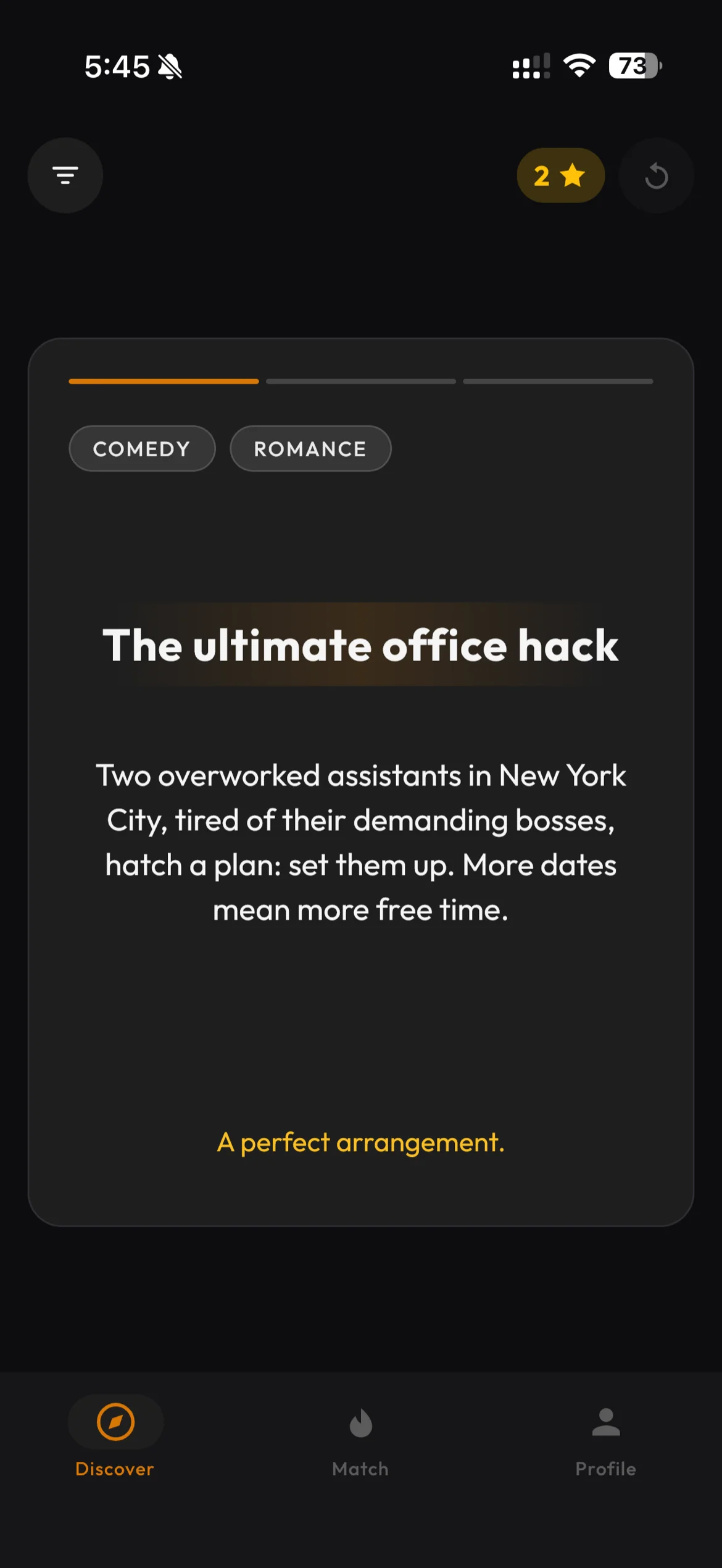
Story-first card.
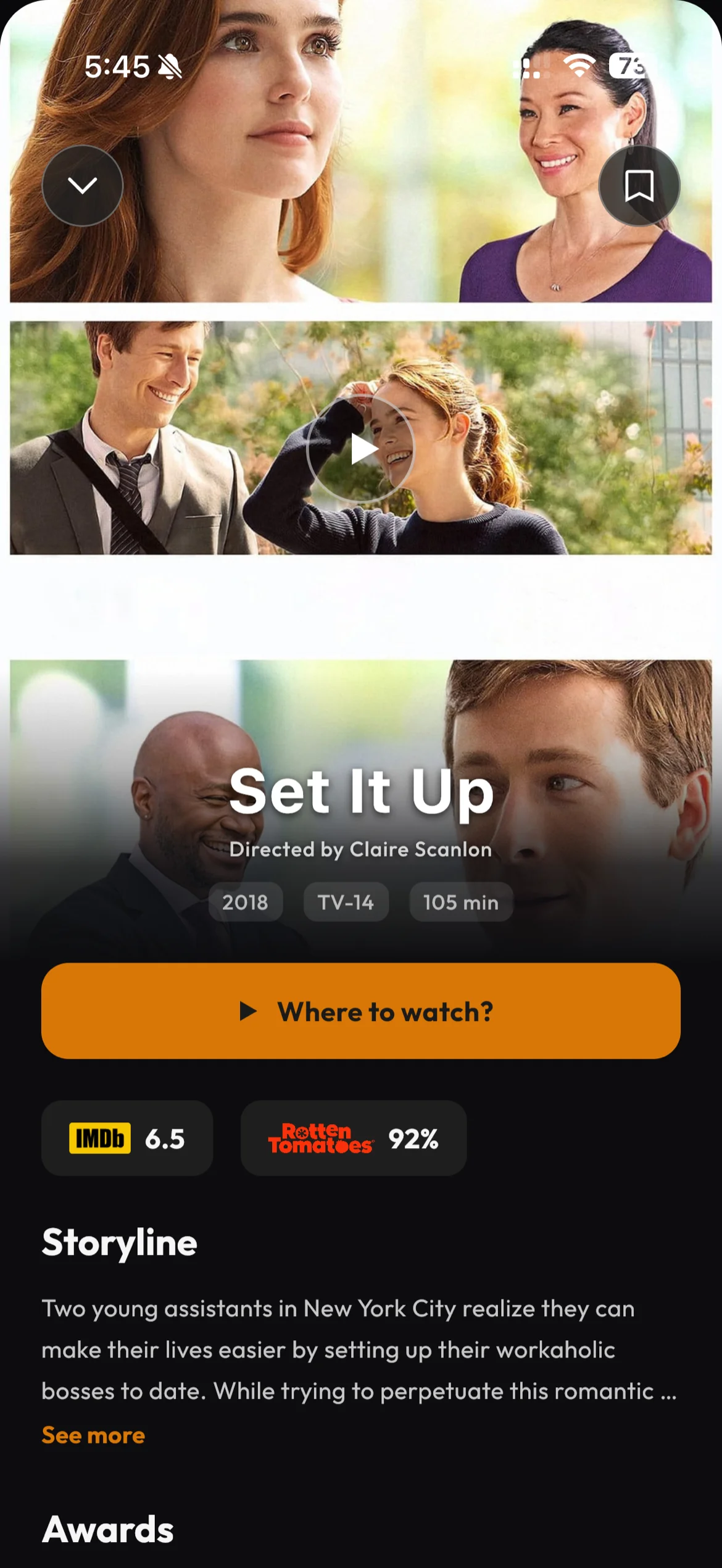
Reveal: poster, year, scores.
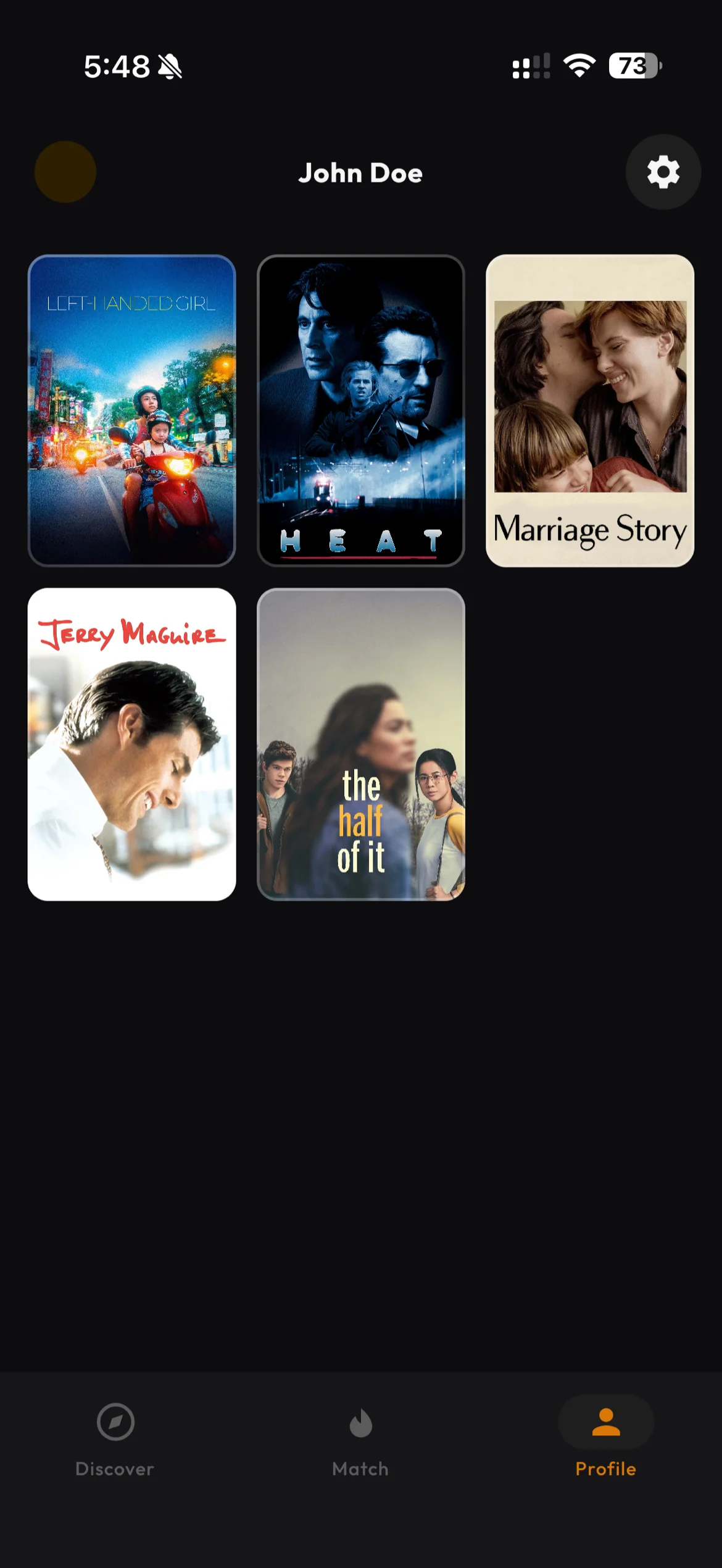
Watchlist for the ones you saved.
The honest answers.
Is this just Tinder for movies?
Same swipe mechanic, sure. But there are no people involved, no notifications about your ex, no "super likes." The card is a one-paragraph pitch and the right swipe just means you want to know more about that film. Calling it Tinder-style is the descriptor; calling it Tinder for movies misses the point.
How are the films picked?
A scoring system that weights critic scores, audience ratings, and how old the film is, mixed with editorial picks. Newer films get a softer score until enough people have rated them, so a buzzy release doesn't drown out the back catalogue.
Why hide the poster?
Posters are designed to sell. A small foreign film with no marketing budget can have a flat-looking poster but be the best thing you watched that year. Story first means you decide on what the film actually is, not how well it's packaged.
What about trailers? I like trailers.
There's a trailer on the details screen once you've revealed the poster. Nothing autoplays.
Can I swipe alone?
Yes. The Discover tab is solo swiping by default. Anything you liked goes straight to your watchlist.
What if I want a poster-first experience sometimes?
You can tap to reveal at any point. The hidden poster is the default, not a lock.
Try swiping for a film.
Free. No ads. Works in 5 languages.