
Films picked for you.
Not pushed at you.
Open Netflix. The carousel at the top is whatever they're promoting this month. The rows below are licensing leverage. The film you'd actually love is six rows down, with a thumbnail that doesn't sell. Miru is a small app for the opposite of that.
The streaming feed isn't on your side.
Streaming services optimise for retention, not for you finding the right film. The carousel is paid placement. The "Top 10 in your country" is whatever happens to be popular this week. The films that would actually move you sit further down because their thumbnails don't perform in A/B tests. Twenty-five minutes later you've scrolled past everything good and put on the same comfort-watch you've already seen twice.
A great film often has a forgettable poster. A bad film often has a beautiful one. Optimising for clicks teaches you to mistrust the catalogue.
One card. One paragraph. One decision.
Miru shows you one film at a time. The card is the pitch — three short paragraphs, sometimes two — written the way a friend with good taste would describe the film to you. No poster, no autoplay, no score. You read. If the story pulls you in, you swipe right and only then see the poster, the year, the director. About twenty swipes, about four minutes. You're done.
-
1
Read the card
The story, told the way a friend would tell it. No scores, no spoilers, no marketing copy.
-
2
Swipe yes or next
Right means you want to know more. Left means the next card comes. Both take about three seconds.
-
3
Reveal if you said yes
Now you see the title, the year, the director, the scores, the streaming services. Still want it? Save to watchlist.
-
4
Watch with intent
You picked it. You weren't sold it. That changes how you settle into the first ten minutes.
Quiet by design.
Three screens, none of them busy. No autoplay trailers, no banner ads, no notifications nagging you about new releases.
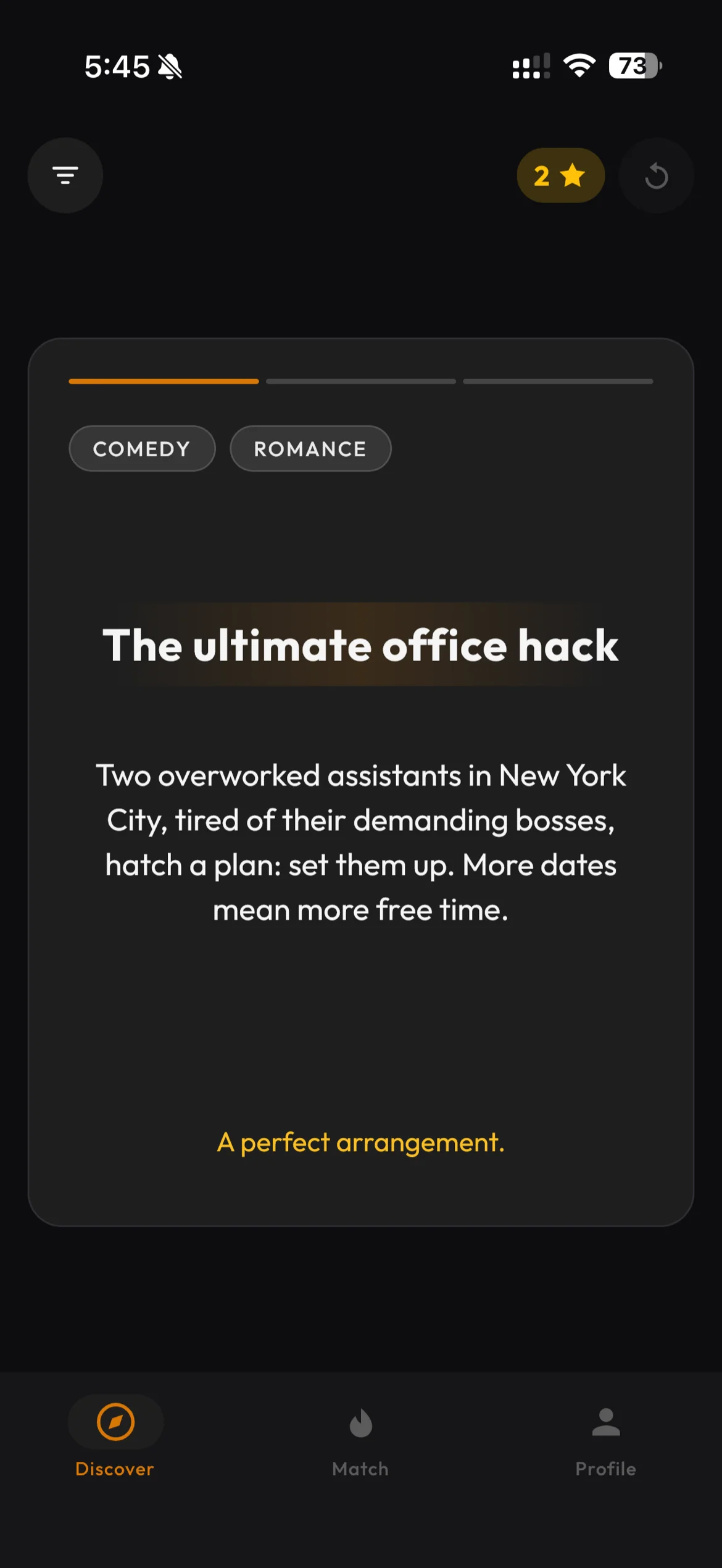
The pitch, told plainly.
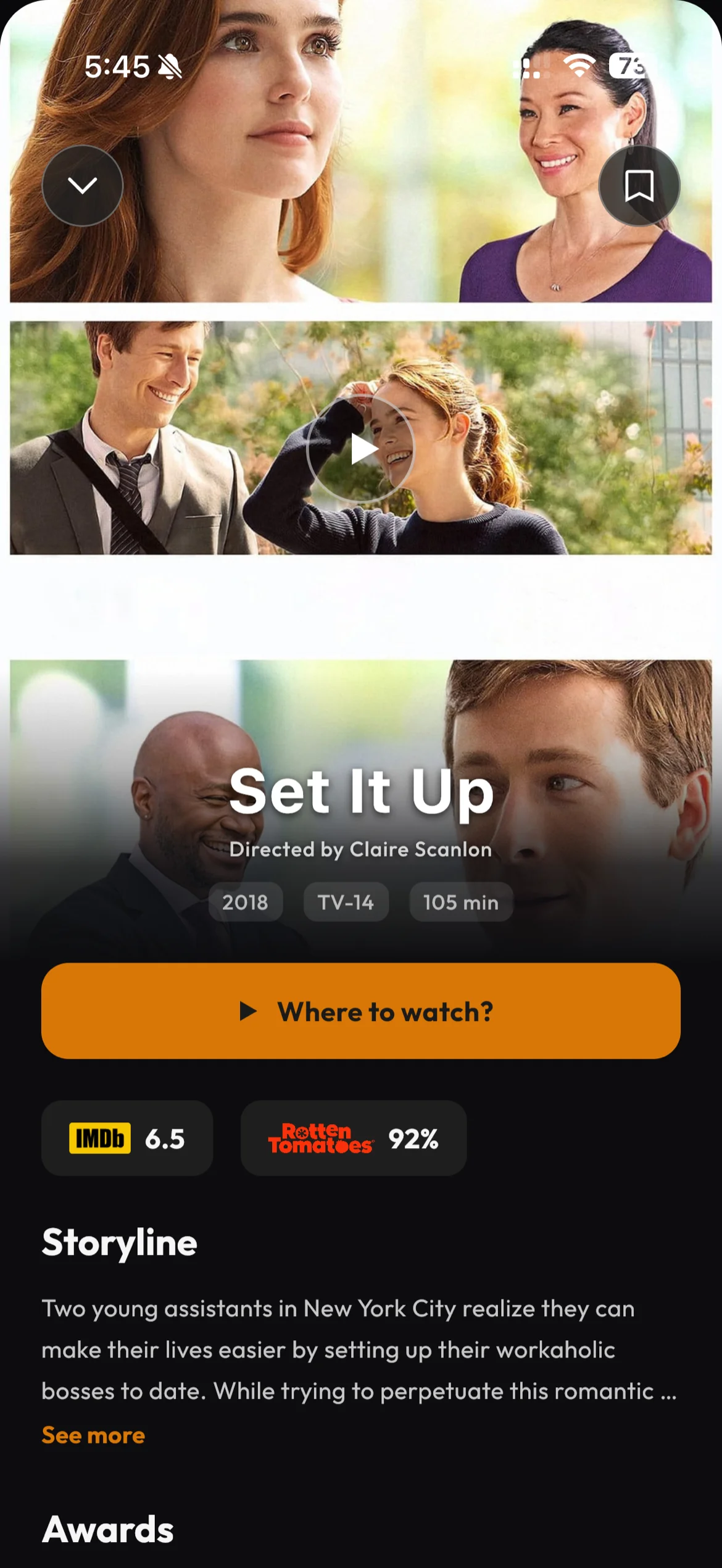
Reveal: everything you need, nothing you don't.
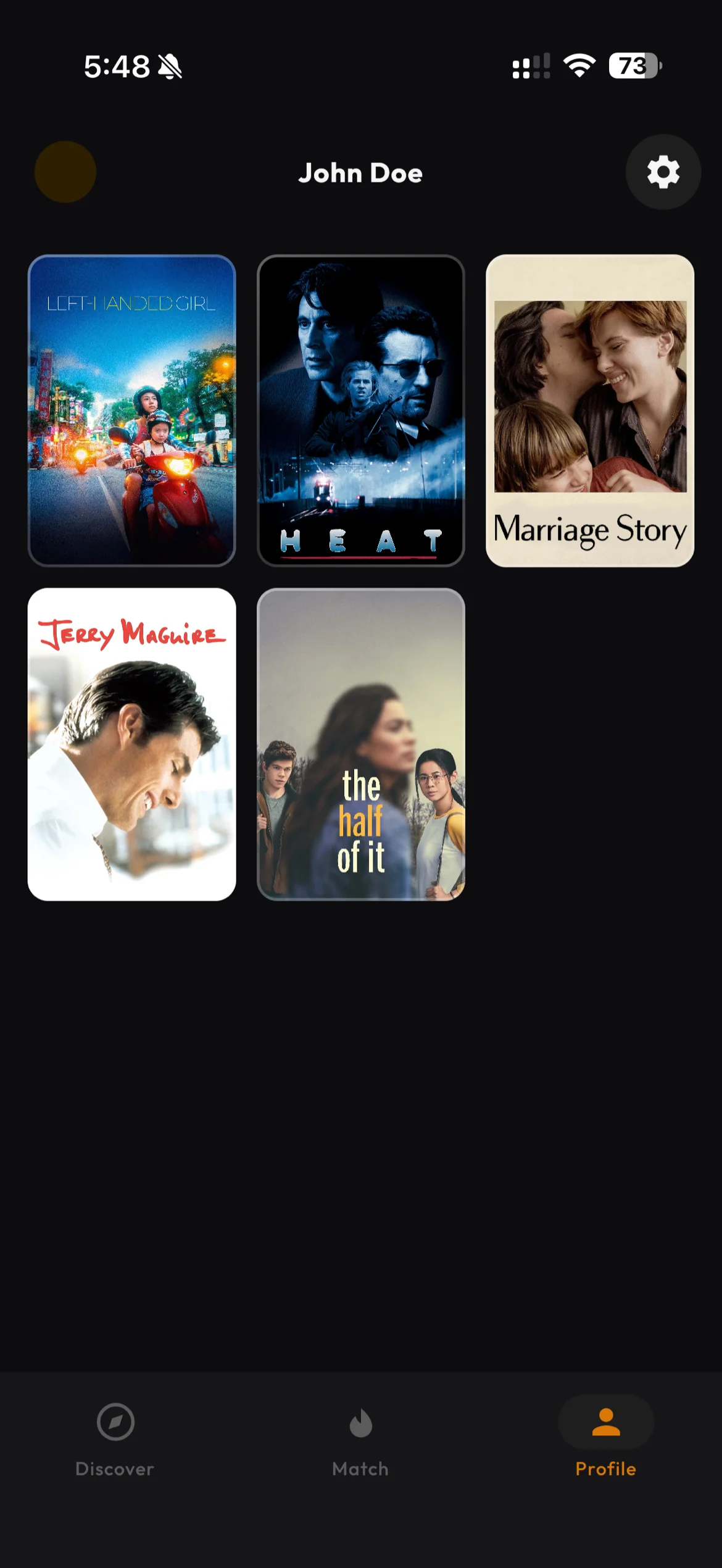
A short list of films you actually chose.
The honest list of what we don't do.
Miru is small on purpose. We don't try to replace the streaming service — we tell you which one has the film, you watch it there. The list of things we deliberately don't ship is part of the design.
- · No autoplay trailers when you open the app.
- · No "Top 10" or "Trending now" rows. Those are streaming-service rhetoric.
- · No notifications about new releases or "films you'd love." If you want to come back, you'll come back.
- · No social feed. Your matches are private to the session.
- · No paid placement. No film pays to be in the deck.
- · No ads. Not now, not later as a "premium tier." This isn't the business model.
The honest answers.
What does "mindful movie discovery" actually mean?
It's twenty small, deliberate decisions instead of one big passive one. You read a card, you swipe, you read the next one. Each takes about three seconds. By the time you're done you've actively chosen something — not been served whatever the platform's promoting.
How is this different from Netflix's discovery?
Netflix shows you the films they're promoting this month and the ones they have favourable licensing on. We're not a streaming service — we don't own films and don't push our own content. We tell you where each film is available and you watch it there.
Is there an algorithm?
A small one. It learns what you swipe right on and biases the next deck towards similar films. It does not autoplay anything, send you notifications, or sell your data.
Who picks what's in the catalogue?
A small editorial team plus a scoring system that weights critic scores, audience ratings, and how old the film is. The catalogue is in the tens of thousands. Nothing is paid placement.
Will I keep seeing the same ten films?
No. The deck is shuffled and weighted away from films you've already seen or already said no to. The whole point is that you reach films you wouldn't have otherwise.
Is this for film snobs?
Not really. Most of the catalogue is mainstream films with strong reviews. Mindful here means you choose deliberately, not that the films are obscure.
What's the business model if there are no ads?
Honest answer: we're funding it ourselves for now. If we charge for something later it'll be a premium feature that doesn't change the core experience. We won't sell ads or data.
Get back the part of the evening you were losing to the scroll.
Free. No ads. Works in English, French, German, Japanese, Spanish.